


Drowning is fast, silent and preventable
Learn how to protect yourself, your loved ones and vulnerable Floridians.
Download the Water Safety Toolkit
(PDF)
Download the Water Watcher
Rules and Responsibilities
Lanyard (PDF)
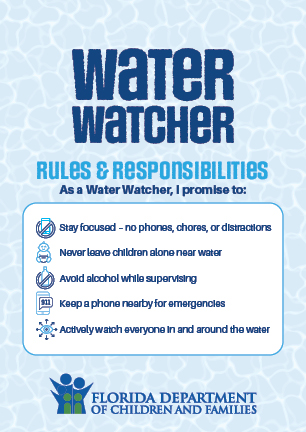
Wear this lanyard while supervising inexperienced swimmers to remind you of your role as a designated Water Watcher and to keep helpful water safety tips easily accessible.
Your Role and Resources
Be part of the solution.
How you can help:
- Serve as a Water Safety Ambassador in your community
- Advocate for free or subsidized swim lessons
- Encourage adaptive programs for people with disabilities
- Share safety resources online and at local events
Quick Checklist:
- Assign a Water Watcher
- Barriers and gates secured
- Life jackets available and used
- Swim skills practiced
- CPR training complete
- Emergency plan rehearsed
Recognize and Respond
Recognizing a drowning:
It often looks nothing like you expect.
- The victim may be silent, face low in the water
- They may appear to tread water or bob in place
- Struggling lasts less than 30 seconds
What to do:
- Reach, throw, don't go. Use a pole, rope, or flotation aid.
- If trained, enter water only with backup and proper equipment.
- Support the airway and check for breathing.
- Begin CPR immediately and call 911.
- Continue until help arrives
After rescue:
Even if breathing returns, seek medical care. Monitor for shock or complications.
Why Water Safety matters
Every second counts around water.
In Florida, drowning remains the leading cause of death for children under five. But the risk extends beyond children. Seniors, adults with disabilities and anyone near Florida's many lakes, rivers, canals, and coastlines are at risk.
Stats and Risk:
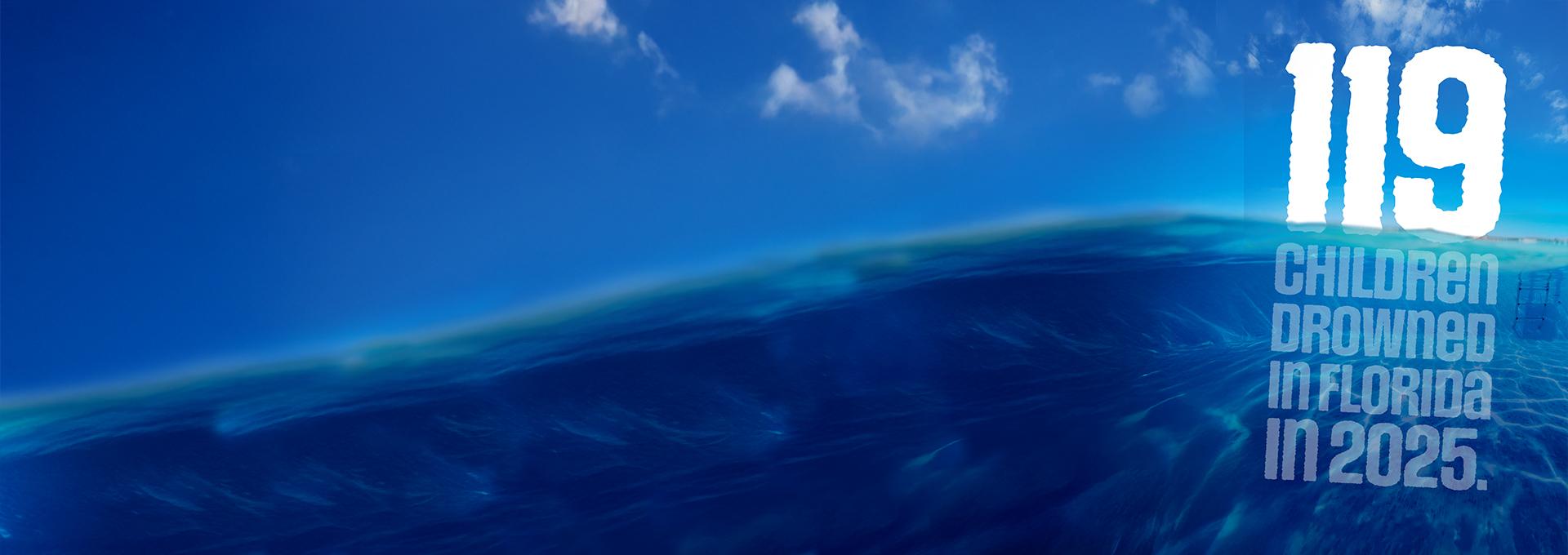
- In 2025, 119 children drowned in Florida. Nearly 80% were under age 3.
- Individuals with autism are up to 160x more likely to drown than neurotypical peers.
- Adults over 65 also face some of the highest drowning rates in the nation.
Why it happens:
- Drownings are often silent — no splashing, no cries for help.
- More than half of U.S. adults have never taken a formal swimming lesson.
- Open water and backyard pools alike pose risks when barriers, supervision, or preparation are missing.
Awareness is the first layer of protection.
Protecting Everyone
Water safety for every age and ability.
Children and Families:
- Start water familiarization early, but never assume a child is "drown-proof."
- Keep toddlers within arm's reach.
- Remove toys from pools when not in use.
- Enroll children, especially those with autism or other special needs, in certified swim lessons.
Older Adults:
- Swim only in supervised areas with a buddy.
- Check medical and mobility conditions before entering water.
- Use life jackets in open water.
Persons with Disabilities:
- Choose adaptive swim programs led by trained instructors.
- Use tactile or visual markers for safety zones.
- Provide consistent supervision and individualized emergency plans.
Faculties and Caregivers:
- Train all staff in CPR and rescue skills.
- Maintain alarms and pool fencing.
- Conduct regular safety drills and checks.
Layers of Protection
Prevention starts with smart safeguards.
Active Supervision:
- Assign a "Water Watcher" whenever anyone, especially a child or vulnerable adult, is near water.
- No distractions, no phones, no lapses in attention.
- Scan to download our Water Watcher lanyard to remind you of the responsibilities.
Barriers and Safe Access:
- Use four-sided pool fences, self-closing gates, and secure door alarms.
- Eliminate unsupervised entry points to pools, lakes, and canals.
Risk Awareness:
- Know your environment: check weather, depth, currents, and conditions.
- Avoid alcohol when swimming or boating, and always wear a U.S. Coast Guard approved life jacket.
Emergency Preparedness:
- Learn CPR and rescue breathing.
- Keep a phone, life ring, or reaching pole close by. Second matter when lives are on the line.
- Drowning is fast. Layers of protection slow it down.
Additional Materials
- Free Stewie the Duck Learns to Swim Mobile Application - Apple | Android
- WaterSmartFL - Water Safety is Everyone's Responsibility
Thank You to Our Partners
- Florida Department of Health
- Florida Department of Education
- Florida Department of State, Division of Libraries
- Florida Department of Agriculture and Consumer Services
- Pool Safely, U.S. Consumer Product Safety Commission
- Barnes and Noble
- Stew Leonard III Children's Charities
- Joshua Collingsworth Memorial Foundation
- Candlewick Publishing
- Scholastic
- Early Learning Coalition
- YMCA
- USA Swimming